Most days I am happy on the main beach at Leptokarya, coffee in hand, the shallow water warming nicely and Mount Olympus standing behind me. But every so often I want something the village beachfront cannot give me: quiet. Real quiet, the kind where the loudest sound is the water turning the pebbles over. For that, you have to trade a little effort. You have to leave the sunbeds and the beach bars behind, walk a bit further than most people are willing to, and let the coast get a little wilder. This is a guide to doing exactly that, and at its heart is one hidden spot I go back to again and again.
I am Yogochun, a local guide who grew up swimming this coast. My grandmother Pepitsa lives along the shore near the Poseidon Palace hotel, so what follows comes from the water and from years of poking around the less obvious corners of the Pierian coast, not from a brochure. There is more about us here if you would like it.
Why bother leaving the easy beaches
Let me be honest first, because I am fond of them. The organised beaches here are lovely and they are easy. The main Leptokarya beach shelves gently, warms beautifully, and has everything to hand. A little further along the Olympic Riviera, Plaka Litochoro is a wide, popular strip of rocks, pebbles and blond sand, bathed by transparent Aegean water and lined with beach bars that run all day and, in high summer, well into the night. If you want a frappe delivered to your lounger, that is where you go, and there is no shame in it.
But there is a different kind of day to be had here, and it starts where the organised beach runs out. Around Plaka the coast breaks into a series of small natural bays, where the golden sand gives way to rocks and pebbles and the crowds thin out fast. Follow that instinct far enough and you reach the spot I love most.
The wild beach below Plaka
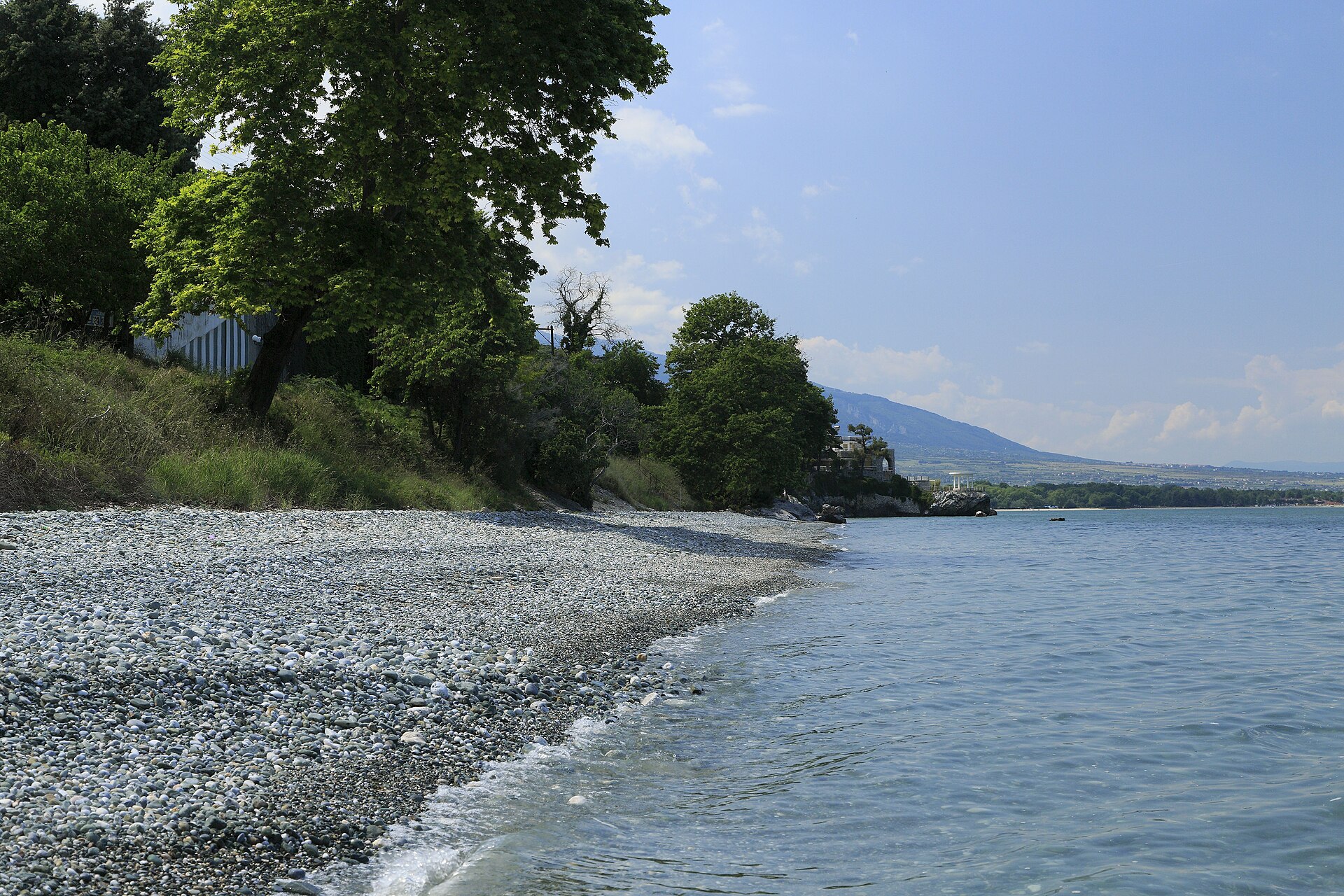
Below Plaka Litochoro, tucked under the cliffs, there is a wilder and harder-to-reach beach that most visitors never find, and that is precisely why it stays so good. You cannot roll up to it and park by the sand. Instead you drive to the top of a steep cliff, park up there, and then make your way down to the shore on foot. There are two footpaths, two rough little walkways, that drop down the cliff face to the water. Neither is long, but both ask something of your knees, and you feel every step of it again on the way back up.
The reward is a beach that feels a world away from the beach bars a short distance north. It is rocky and pebbly rather than soft sand, and the shoreline deepens quickly, so you are in proper swimming water only a few strides from dry land. The sea here is clear in a way the busy stretches rarely manage, because there is so little churning it up, and on a calm morning you can see straight down to the stones on the bottom. I have floated out there with nobody else in sight and thought, not for the first time, that this is the version of the Greek coast people imagine before they arrive.
That quick drop into deep water is the whole character of the place, and it cuts both ways. It is glorious if you are a confident swimmer who likes to actually swim rather than paddle. It is not the spot for small children or nervous swimmers, because there is no long shallow shelf to stand in and wade about; the sea gets deep close in. If that describes your group, keep it for another visit and take the little ones to the gentle main beach instead.
Getting down there safely and happily
None of this is dangerous if you come prepared, but the effort is real and the beach gives you nothing for free. A few honest words before you go:
- Wear proper footwear for the walk. The path down and, more to the point, the climb back up want decent shoes with a bit of grip, not flip-flops. It is not a hike, but it is a proper scramble in places.
- Pack water shoes for the water itself. The entry is rocky and pebbly, and a thin pair of water shoes turns a wince into a non-event, both getting in and getting out.
- Go in the morning. This coast is calmest and clearest early, before any afternoon breeze gets up. Morning is when that see-to-the-bottom water is at its best, and when the climb is not done in the full heat.
- Bring your own water and shade. There are few or no facilities down there, which is exactly why it is quiet. Assume nothing is provided; carry your own drinking water, sun cream and something to sit under.
- Judge the sea before you commit. On a calm day it is a joy. If it is choppy, a rocky entry over a quick drop-off is less forgiving, so be sensible and swim within yourself.
Do that, and you get one of the finest, quietest swims on this whole coast. I would not swap it for any sunbed.
What to take to a wild beach
The single rule of these undeveloped spots is that you are self-sufficient. There is no kiosk to save you, so the small bag you pack is the difference between a perfect morning and a cut foot and a headache. Here is what I always carry:
- Plenty of drinking water, more than you think you need
- Water shoes for rocky and pebbly entries
- Proper footwear for the walk down and back up
- A hat, high-factor sun cream, and your own shade, since there are no umbrellas
- A small first-aid touch: a plaster or two for the odd graze on the rocks
- A bag to carry every scrap of your rubbish back out with you
- Cash, because there is nowhere down here to spend a card anyway
That last point matters more than any of the others. These beaches stay beautiful because the people who make the effort to reach them tend to be the kind who leave nothing behind. Please be one of them.
Other quiet corners, if you want sand not rock
The hidden beach below Plaka is my favourite, but it is not for everyone, and some days you simply want sand under your towel and fewer people around, without the scramble. The good news is that the Pierian coast is long, and the quieter stretches are there if you go looking a little way from the busiest centres.
In general terms, and I would rather hedge than oversell, the coast around Skotina, Gritsa and Variko tends to be gentler and less frantic than the main resort beachfronts. Skotina runs for a couple of kilometres of broad sand between Leptokarya and Platamonas, with plenty of open room to spread out away from the organised sections. Gritsa, closer to Litochoro, is a calmer mix of pebbles and sand that locals favour. Variko, down near Platamonas, is a small, quiet, less touristy bay of fine sand that people go to precisely to escape the busier beaches. None of these is a secret exactly, and the level of organisation and the beach bars change from season to season, so check locally for what is actually open when you visit rather than trusting me on the details months in advance.
You can happily string a few of these together over a week, hopping along the coast for a change of sand each day. My day trips from Leptokarya guide covers how to range further along the shore and inland, and if you want the busy-versus-quiet trade-offs laid side by side, my beaches compared guide does exactly that.
A morning to plan around
If you take one thing from me, make it this: treat a wild beach as a morning outing, not an all-day expedition. Arrive early while the sea is glass and the light is soft, swim your fill, and be climbing back up the cliff before the midday heat makes hard work of it. Then let the rest of the day be easy. Wander back towards the village for a long lunch, or reward the effort with a cold drink somewhere with a view; my notes on the best beach bars near Leptokarya will point you at the good ones.
The season shapes all of this too. Early and late summer give you the quiet corners almost to yourself, while the peak weeks fill even the harder-to-reach spots a little; my guide to the best time to visit Leptokarya explains how the coast changes month by month. And since these beaches all sit in the shadow of the great mountain, a wild-swimming morning pairs beautifully with a day up high, which is its own kind of escape from the crowds; I have written all about Mount Olympus from Leptokarya if that tempts you.
One quiet plea. Wild beaches have no lifeguard, no bins and no kiosk. Swim within your ability, keep an eye on the sea and on each other, and carry every last thing home with you. The reason these places are still worth the walk is that the people before you looked after them.
A final word from Yogochun
The busy village beach and the wild beach below the cliffs are two different pleasures, and you do not have to choose between them; a good week here has room for both. But if you are the sort who will happily trade a short scramble and a rocky entry for clear, deep water and near-total quiet, then that hidden spot under Plaka is the memory you will take home. Pack your water shoes, go in the morning, carry your own water and shade, respect the drop-off, and leave nothing behind. The effort is the price of admission, and I promise you it is a fair one. If you want more of these quieter habits, my Leptokarya insider tips are full of them.
Written by Yogochun, your local guide to Leptokarya, Plaka and the Pieria coast. My family, including my dear Pepitsa near the Poseidon Palace, has deep roots on this shoreline, and I write these guides so you can experience it the way we do.
Enjoying the guide? Get a short monthly note with new guides and local tips. Subscribe here.